Making solar technology more reliable and longer lasting
Lucy Perkins
Jun 15, 2026
As more solar power is added to the energy grid across the world, researchers at Carnegie Mellon University are thinking about what comes next: how to maintain those solar panels.
The technical term for when dust, pollen or other particles in the air inevitably settle on top of solar panels is called ‘soiling’ and it can significantly reduce how much light a panel can absorb. That can be a problem in the arid, sunny regions where solar farms are often located such as the American Southwest, India, and the Sahel region of Northern Africa.
Assistant research professor Stewart Isaacs is using wind to take on soiled solar panels. In his work at Carnegie Mellon University Africa, Isaacs is focused on improving and maintaining solar power in places that don’t have access to the electrical grid. Because solar is one of the only options in these locations, the stakes of making sure the panels work reliably is high.
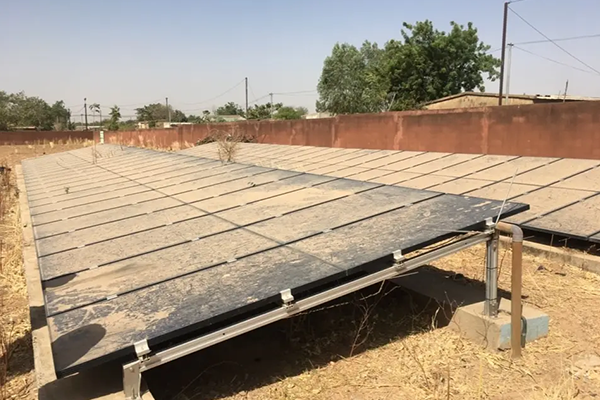
Source: Stewart Isaacs
Isaacs hopes his research will help avoid situations like this: solar panels covered in dust in Burkina Faso.
“In some of the dirtiest locations, dust can actually reduce power output by more than half,” said Isaacs, part of the College of Engineering. “My research looks at how we account for these floating particulates to estimate the performance of our solar panels.”
To that end, Isaacs uses computational models to analyze solar panel performance at different levels of soiling.
“A better understanding of the data allows us to know exactly how often we need to clean them and whether there are other methods that we can explore that might allow us to clean them strategically,” he said.
Isaacs is also thinking about how physical changes to the shape of a solar panel could impact its cleanliness.
“We know that wind plays a key role in kicking the dust off the panels,” Isaacs said. “We’re trying to understand how the aerodynamics of the wind interact with the dust and be intentional about the way we design our solar panels to enhance that wind and keep the panels cleaner. I want to kind of tease all that out to make sure that we're getting the best possible solution.”
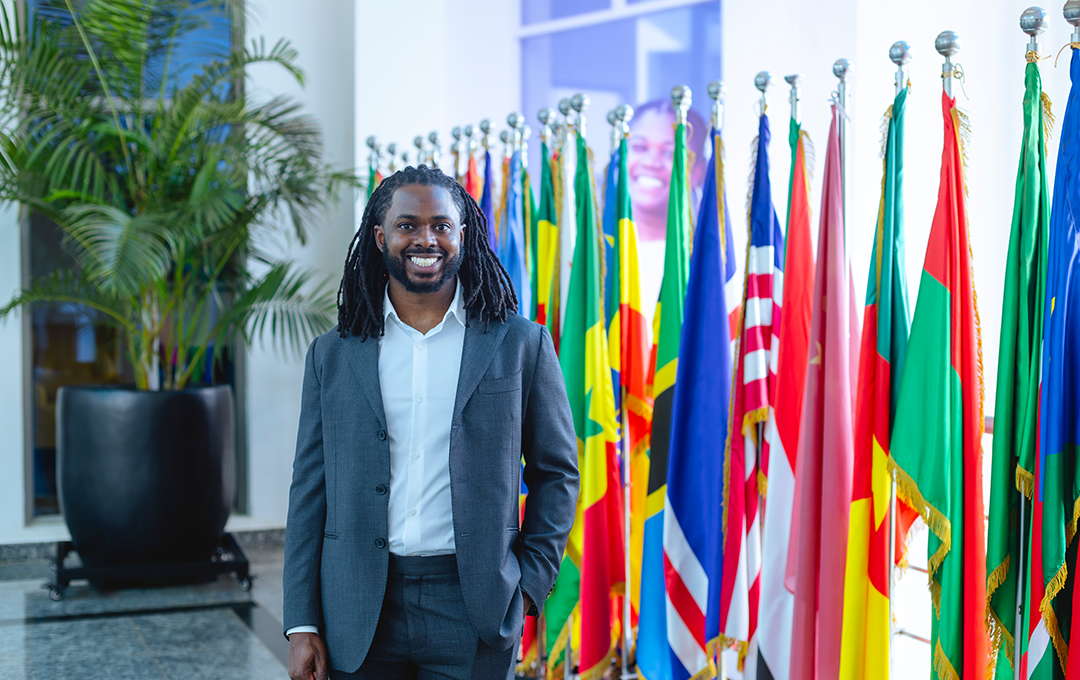
Isaacs is an assistant research professor at CMU-Africa